Students on the PRO-module Trends and Transitions at Breda University of Applied Sciences took on real-world challenges from the European MONA project. Over the past few months, they have conducted practice-based research in two nature areas: Utrechtse Heuvelrug National Park and Van Gogh National Park. Their work was driven by the question: how can we make recreation and travel to nature more sustainable, enjoyable and accessible?
At National Park Utrechtse Heuvelrug, the students focused on the recently introduced shared bicycle system in and around the northern part of the park. They investigated how shared bikes and mobility hubs can contribute to a more future-proof recreational mobility system, looking at accessibility, ease of use and the potential for shared mobility to ease visitor pressure on the landscape. Their main conclusion was that improving access to nature areas through sustainable options such as shared bicycles can help reduce that pressure while keeping the areas open and welcoming to visitors.
Through trend analysis and scenario thinking, the students explored different visions for the future of recreational transport. To ground their work, they carried out fieldwork in both nature areas, speaking with visitors, exploring the recreational infrastructure and making observations on the ground. Their findings were also informed by the reports and future scenarios developed within the MONA project. Combining this knowledge with hands-on experience, the students developed substantiated recommendations and scenarios, which they translated into infographics and policy advice.
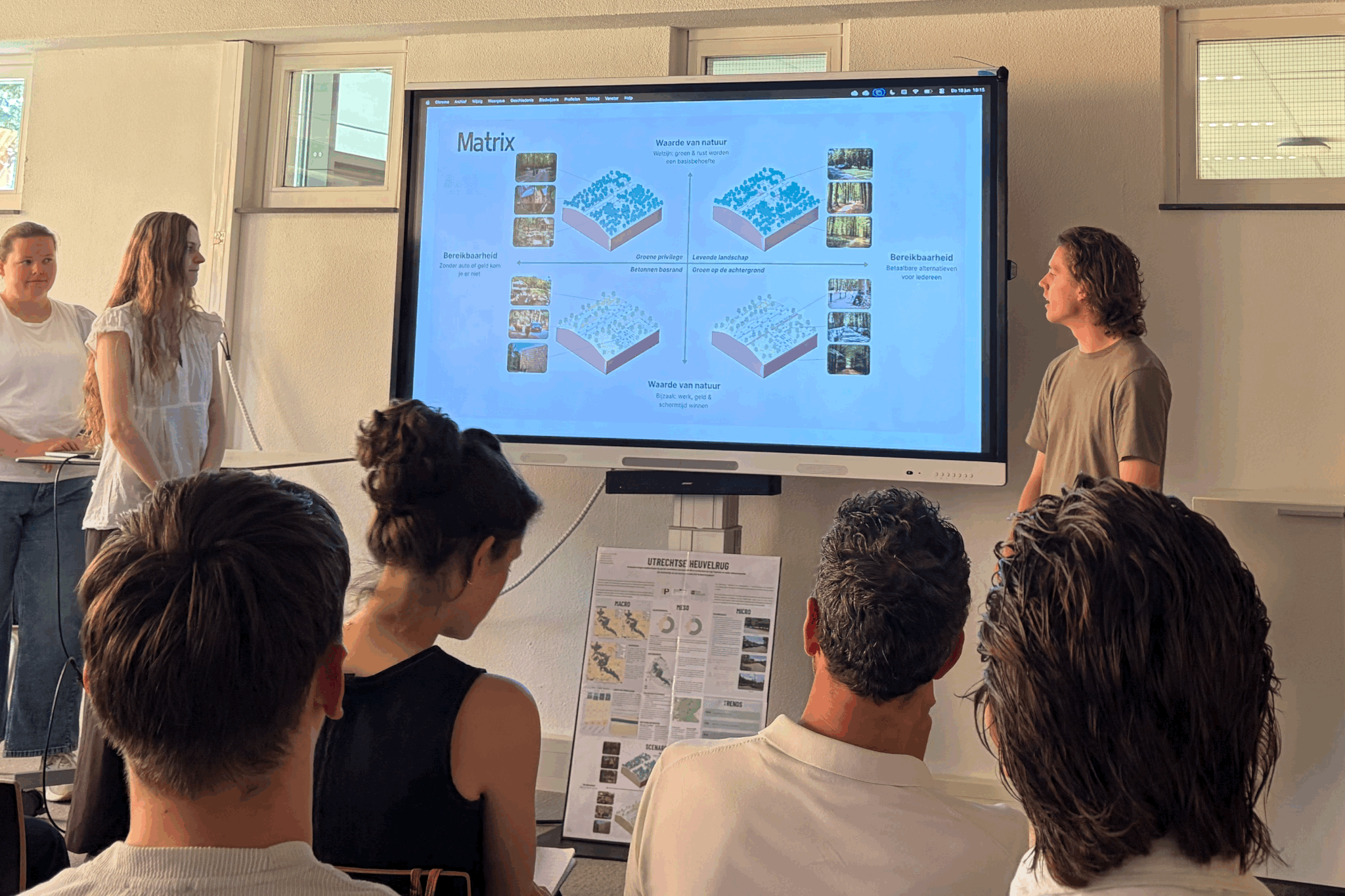
The student research project was facilitated by the Research and Education Hub Utrechtse Heuvelrug, where scientists, students and stakeholders work together on questions from the research agenda of National Park Utrechtse Heuvelrug, contributing to the protection, conservation and development of nature, landscape and heritage in the area.